Category Archives: OutLook

Outlook AutoArchive Setup Guide

Outlook AutoArchive Setup Guide

When cloud mailboxes hit quota limits, Outlook’s AutoArchive feature can automatically move older emails from the server into a local PST file. This reduces hosting usage and keeps history safe on the user’s computer.

Step 1 – Open AutoArchive Settings

# In Outlook
File → Options → Advanced
AutoArchive Settings…

Step 2 – Configure AutoArchive

# Recommended Settings
Run AutoArchive every: 14 days
Archive items older than: 90 days
Move old items to: Archive.pst (local drive)

Step 3 – Manual Archive (if interrupted)

If Outlook was closed or the PC shut down during archiving, you can rerun it manually:

# Manual Archive
File → Tools → Clean Up Old Items
Select folders → Archive items older than: 90 days
Choose Archive.pst

Step 4 – Verify Archive

After archiving, open Archive.pst in Outlook (File → Open → Outlook Data File) and confirm emails are present before deleting from the server.

Notes

  • AutoArchive moves emails off the server, freeing quota immediately.
  • POP3 accounts already store mail locally in PST — no archiving needed.
  • IMAP accounts require archiving/export to reduce server usage.
  • For suspended accounts, request a 24h unsuspend window to run archiving.

මෙම මාර්ගෝපදේශය සිංහලෙන් කියවීමට මෙතැන ක්ලික් කරන්න

Outlook AutoArchive සැකසුම් මාර්ගෝපදේශය (සිංහලෙන්)

Cloud තැපැල් පෙට්ටිවල (mailboxes) ධාරිතාව සීමාවට ළඟා වූ විට, Outlook හි AutoArchive විශේෂාංගය මගින් පැරණි ඊමේල් ස්වයංක්‍රීයව සේවාදායකයෙන් (server) ඉවත් කර දේශීය PST ගොනුවකට ගෙන යා හැක. මෙය සේවාදායකයේ ඉඩ ප්‍රමාණය අඩු කර ගැනීමට සහ ඔබේ පරිගණකයේම දත්ත සුරක්ෂිතව තබා ගැනීමට උපකාරී වේ.

පියවර 1 – AutoArchive සැකසුම් විවෘත කරන්න

Outlook තුළ:

File → Options → Advanced → AutoArchive Settings…

පියවර 2 – AutoArchive වින්‍යාස කරන්න

නිර්දේශිත සැකසුම්:

Run AutoArchive every: 14 days
Archive items older than: 90 days
Move old items to: Archive.pst (දේශීය ධාවකය)

පියවර 3 – Manual Archive (if interrupted)

පරිගණකය ක්‍රියා විරහිත වීම වැනි හේතුවක් නිසා Archive වීම අතරමග නතර වුවහොත්, ඔබට එය නැවත අතින් සිදු කළ හැක:

File → Tools → Clean Up Old Items
Select folders → Archive items older than: 90 days
Choose Archive.pst

පියවර 4 – Archive එක පරීක්ෂා කරන්න

Archive කිරීමෙන් පසු, Outlook හි Archive.pst ගොනුව විවෘත කර (File → Open → Outlook Data File), ඊමේල් සියල්ල එහි ඇති බව තහවුරු කරගන්න. ඉන්පසුව ඔබට සේවාදායකයෙන් ඒවා මැකීමට හැකිය.

වැදගත් කරුණු

  • AutoArchive මගින් ඊමේල් සේවාදායකයෙන් ඉවත් කරන බැවින් ක්ෂණිකව ඉඩ නිදහස් වේ.
  • POP3 ගිණුම් දැනටමත් PST ගොනුවක දත්ත තබා ගන්නා නිසා ඒවාට Archive කිරීම අවශ්‍ය නොවේ.
  • IMAP ගිණුම් සඳහා සේවාදායකයේ ඉඩ අඩු කර ගැනීමට Archive කිරීම හෝ අපනයනය කිරීම (export) අවශ්‍ය වේ.
  • ගිණුමක් තාවකාලිකව අත්හිටුවා ඇත්නම්, Archive කිරීමට පැය 24ක කාලයක් ඉල්ලා සිටින්න.
Slow Outlook 2016 Autodiscover with Office 365 or Internal Exchange Server

In case you run into slow account setup with Outlook 2016, which can take up to 10 mins or more. To workaround this issue, you may use the following Registry settings to force Outlook to bypass the root domain discovery and redirect to the autodiscover CNAME or A record to resolve the address for autodiscover settings.

For Outlook 2016:

Windows Registry Editor Version 5.00
[HKEY_CURRENT_USER\SOFTWARE\Microsoft\Office\16.0\Outlook\AutoDiscover]
“ExcludeHttpsRootDomain”=dword:00000001

Note: For Office PC that has joined the Microsoft Active Directory, there is no need to amend the registry. This setting will be applied via the group policy when you login the system. and make sure Exchange Internal auto discovery DNS Entries are already created to auto discover internal Exchange Server


More Information Available at http://www.mistercloudtech.com/2015/12/08/how-to-resolve-slow-office-2016-autodiscover-with-office-365/

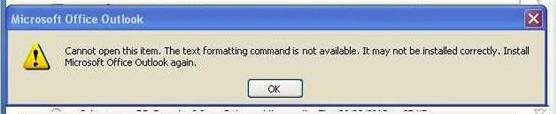
Cannot open this item. The text formatting command is not available. It may not be installed correctly. Install Microsoft Office Outlook again

outlook1000

Symptoms

When you try to open an email message in Microsoft Outlook 2013, Outlook 2010, or Outlook 2007, you receive the following error message:

Cannot open this item. The text formatting command is not available. It may not be installed correctly. Install Microsoft Outlook again.
Microsoft Solution for this avilable

Some say that computer problems happen at the worst times. I’m not sure that is true, but I won’t argue. Without warning, my Outlook email stopped working last week. I could receive email, but I couldn’t open any items. Instead, I saw an error message that read “Cannot open this item. The text formatting command is not available. It may not be installed correctly. Install Microsoft Office Outlook again.” Fortunately, my main email address runs in parallel so I wasn’t totally hosed.

For most of my Outlook email problems, I can work my way to a solution. This one had me stumped although I had some functionality running Outlook in safe mode.

To start Microsoft Outlook in safe mode,

  1. For Windows 7, click Start. For Windows 8 or Windows 8.1, press your Windows key and then the X key, then choose Run from the popup menu.
  2. Type Outlook /safe in the Run dialog box.

Prior to calling Microsoft Support, I did a query on the error message to see what solutions had been suggested. While I don’t know the cause of the problem, I found 3 suggestions that might solve the problem.

(For me Suggestion 3 worked)

Suggestion 1: Reinstall Microsoft Outlook.

If the developer offers a solution on an error message, that’s where I start. Let’s face it, they have the inside advantage. In my case, I recently installed some Windows patch files and thought they may have contributed to the problem.

Suggestion 2: Create a New Outlook Profile

From what I read, this procedure fixed the problem for many folks. This was the first thing the Microsoft technician suggested.  SlipStick has a good tutorial on this.

Like the first suggestion, this one didn’t fully resolve my problem. It appeared to work and then the error message reappeared. Again, I had to call Microsoft.

Suggestion 3: Close Outlook and Rename 4 .DAT files

The third time was a charm as the saying goes. This tech rep offered a different solution from his peers. In my case, this solution worked.

There were four .dat files that were renamed so the originals were still around if needed.

  • outcmd.dat
  • frmcache.dat
  • views.dat
  • extend.dat

When Outlook restarted, it created new versions of those files.

As a result of this fix, I did lose some custom view and toolbar settings, but I think it was worth the cost. It’s was much easier for me to recreate those settings than to be without my email. And yes, I’m still catching up on email inquiries if you sent me something.

Archive items manually – Outlook 2010


An efficient
way to reduce the size of your Outlook Data File (.pst) or Exchange mailbox is
to regularly archive older items. Unlike a traditional backup in which a copy of
Outlook items is made, archived items are moved to a separate Outlook Data File
(.pst). Archived items can be accessed at any time by opening the file.

Note The Archive command and feature doesn’t appear
for any account in your Outlook profile if you include an Exchange Server
account and your organization uses Microsoft Exchange Server Online Archive.
Your network administrator can also disable this feature.

By default, older Outlook items archived automatically on a regular interval.
To learn more about AutoArchive, see Use
AutoArchive to back up or delete items
.
You can also manually back up and archive items, in addition to AutoArchive
or as a replacement. Manual archiving provides flexibility, and allows you to
specify exactly which folders are included in the archive, and which archive
Outlook Data File (.pst) is used.
To manually archive Outlook items, do the following:

  1. Click the File tab
  2. Click Cleanup Tools.
  3. Click Archive.
  4. Click the Archive this folder and all subfolders option, and
    then click the folder that you want to archive. Any subfolder of the folder you
    select is included in this manual archive.
  5. Under Archive items older than, enter a date.

Archive dialog box

  1. If you do not want to use the default file or location, under Archive file, click Browse to specify a new file or
    location. Browse to find the file that you want, or enter the file name, then
    click OK. The destination file location appears in the Archive file box.
  2. Select the Include items with “Do not AutoArchive” checked
    check box to include any items that might be individually marked to be excluded
    from automatic archiving. This option does not remove that exclusion from these
    items, but instead ignores the Do not AutoArchive check box for
    this archive only.

Turn off AutoArchive

If you want to archive only manually, you must turn off AutoArchive. Do the
following:

  1. Click the File tab.
  2. Click Options.
  3. On the Advanced tab, under AutoArchive,
    click AutoArchive Settings.
  4. Clear the Run AutoArchive every n days check box.

Resource Coordinators: Enabling and Disabling the Offline Address Book

that you disable Outlook’s ability to download the Offline Address Book by using the steps outlined in the Disable the Offline Address Book section. Doing so will allow you to see resources in the GAL within a few minutes of creating them using the Resource Coordinator Tools. Otherwise, Outlook stores a “cached” copy of the address book, which is updated daily. Steps to re-enable the Offline Address Book are also provided.

Disable the Offline Address Book – Updated Aug. 1 2008 for Windows Vista

  1. Close Outlook.
  2. Download the Disable/Enable Offline Address Book Scripts (ZIP)
  3. From Windows Explorer, open (by double-clicking) the OutlookOABDownloadScripts.zip file from the location where it was downloaded.
  4. Run (by double-clicking) the OutlookDisableOABDownload.vbs script. Note – in Windows Vista, right-click on the script and select “Run As Administrator” (your local IT support person may need to provide administrative credentials at this step).
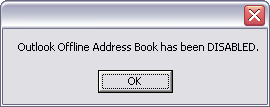
  5. If it runs successfully, you should see the following confirmation message:

rc_disable_enable_OAB_01

At this point, Outlook will no longer automatically download the offline address book. However, if you click the “Send/Receive” button within Outlook, by default it will reset your offline address book setting – in effect it re-enables the offline address book. To prevent this from happening, complete the following steps.

  • Open Outlook
  • Go to “Tools” > “Send/Receive” > “Send/Receive Settings” > “Define Send/Receive Groups”
  • Highlight the group “All Accounts” and click “Edit”
  • In Outlook 2007, check the “Include the selected account in this group” checkbox
  • Uncheck the “Download offline address book” checkbox
  • Click “OK”
  • Click “Close”
  • Copy the names in AutoComplete to another computer

    Important You must exit Outlook before starting the following procedure. The names will be included in AutoComplete when you restart Outlook.

    On the computer with the saved AutoComplete names, go to drive:\Documents and Settings\user name\Application Data\Microsoft\Outlook.

    Note Depending on your file settings, this folder might be hidden. To view the files in this folder, do one of the following:

    Microsoft Windows XP

    1. Click Start, and then click My Computer.
    2. On the Tools menu, click Folder Options.
    3. Click the View tab, and then, under Advanced settings, under Hidden files and folders, click Show hidden files and folders.

      Microsoft Windows 2000

      1. Double-click My Computer on your desktop.
      2. On the Tools menu, click Folder Options.
      3. Click the View tab, and then click Show hidden files and folders.

    1. Right-click profile name.nk2, and then click Copy.Tip You can copy the file to removable media, such as a floppy disk or a CD, and then copy the file to the correct location on the other computer. Or you can attach the file to an e-mail message and send the message to yourself. On the new computer, open the attachment in Outlook, and then save it to the correct location.
    2. On the computer where you want to populate the AutoComplete feature, copy the file to drive:\Documents and Settings\user name\Application Data\Microsoft\Outlook.
    3. If the Outlook user profile name is different on the computer where you are moving the .nk2 file, you must rename the file with the same Outlook user profile name after you copy it to the correct folder. For example, if you move Kim Akers.nk2 from the original computer with an Outlook user profile name of Kim Akers, and you copy the Kim Akers.nk2 file to the new computer, you must rename it with the Outlook profile name being used on the new computer.
    4. When prompted about replacing the existing file, click Yes.
    5. Open Outlook to view changes.

    Clear the Auto-Complete Email Address Cache in Outlook.com

    outlook

    Outlook 2003 has an automatic completion for any email address that you try to type into the To or CC fields. This feature does not pull from the contacts or address book, because you may have tried to email somebody that wasn’t in your contact list, and it will still add that to the auto complete list.

    The problem comes in when you put in a bad address, and then every time you go to type in the email address, the incorrect one appears in the auto complete list.

    To fix this problem, there are two ways around this. The easiest way is this:

    • Start typing in the address that shows up incorrectly.
    • Hit the Down arrow key to select the auto completed address.
    • Hit the Delete key to delete the auto complete address

    The other way is by opening the profile folder and deleting the .nk2 file.

    • Open up windows explorer, and paste the following into the address bar: %APPDATA%\Microsoft\Outlook
    • Delete the Outlook.NK2 file that you find in this folder.