Category Archives: Windows 10

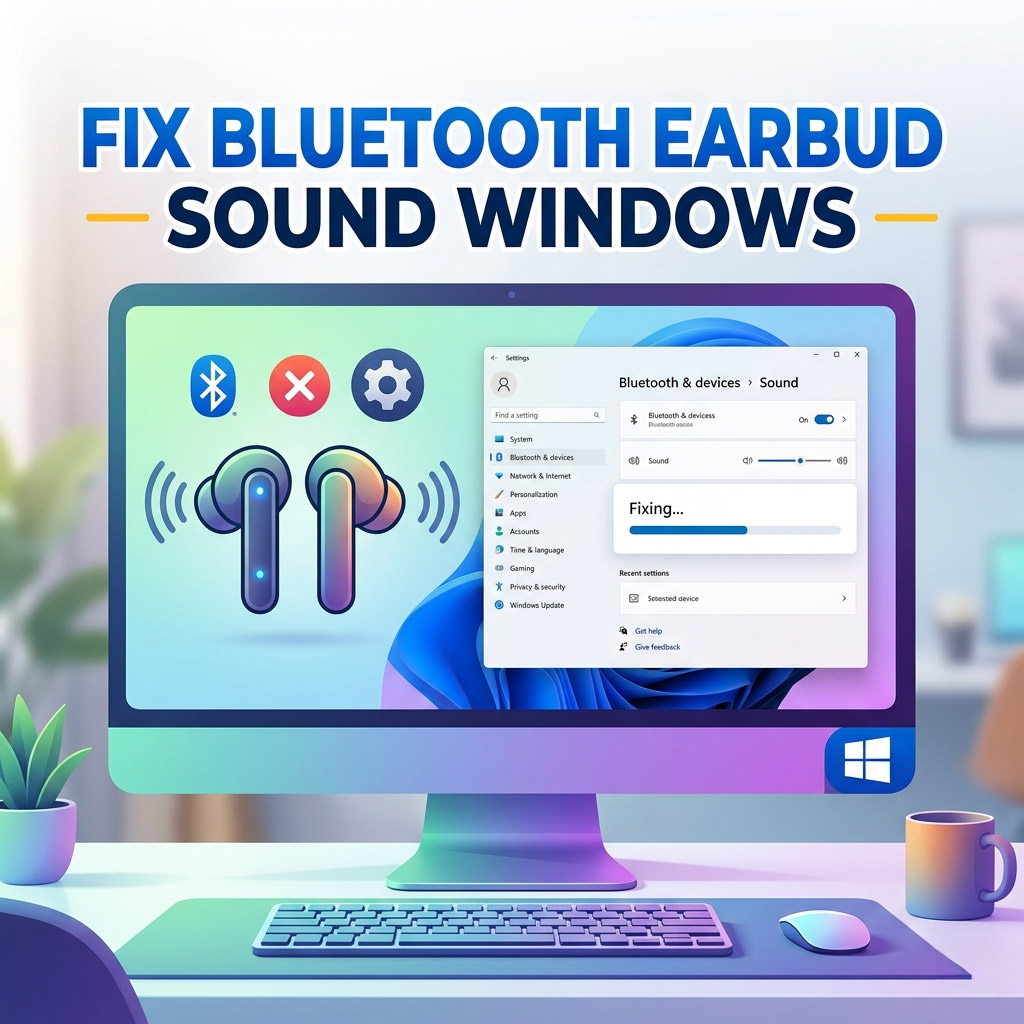
Fix Bluetooth Earbud Sound by Disabling Hands‑Free Telephony in Windows

Fix Bluetooth Earbud Sound: Disable Hands-Free Telephony Windows

Fix Bluetooth Earbud Sound by Disabling Hands‑Free Telephony in Windows

Many Bluetooth earbuds sound great on phones but poor on laptops. This happens because Windows often connects them in Hands‑Free Telephony (HFP/HSP) mode, which prioritizes the mic but drastically reduces audio quality. To get rich stereo sound, you need to force Stereo (A2DP) mode.

Step 1: Check Playback Devices

  1. Right‑click the speaker icon in the taskbar.
    • Windows 10: Choose Sounds.
    • Windows 11: Choose Sound Settings, scroll down, and click More sound settings.
  2. Go to the Playback tab.
  3. Look for two entries for your earbuds:
    • Headset (Hands‑Free AG Audio): Low quality, mono sound.
    • Headphones (Stereo): High quality, rich audio.
  4. Select Headphones (Stereo) and click Set Default.

Step 2: Disable Hands‑Free Telephony

This is the “permanent fix” that prevents Windows from switching back to low-quality audio.

  1. Open Control PanelHardware and SoundDevices and Printers.
  2. Find your earbuds under the “Devices” section. Right‑click them and choose Properties.
  3. Go to the Services tab (wait a few seconds for it to load).
  4. Uncheck the box for Hands‑Free Telephony.
  5. Click Apply. Your earbuds may disconnect and reconnect automatically.
Important Note: Disabling this service turns off the earbud’s built-in microphone. You will need to use your laptop’s internal mic for Zoom or Discord calls.

Step 3: Enable Audio Enhancements

Once your earbuds are locked in Stereo mode, you can further improve the depth of the audio.

  1. Return to the Playback tab (from Step 1).
  2. Select your Stereo Headphones → click Properties.
  3. Open the Enhancements tab. (Note: If this tab is missing, your hardware uses a third-party app like Realtek or Dolby for these settings).
  4. Enable the following:
    • Bass Boost: Adds depth and punch to low frequencies.
    • Loudness Equalization: Balances volume for a fuller sound.
  5. Click ApplyOK.

Result

By removing the Hands-Free bottleneck, your Bluetooth earbuds will sound richer, warmer, and closer to phone‑level quality—even on older hardware. You can re-enable the service at any time if you find you specifically need the earbud mic for a call.

Conclusion

Unlocking the Stereo (A2DP) profile is the best way to enjoy music and movies on Windows. While you lose the earbud microphone, the massive jump in audio quality is almost always worth the trade-off.

Fix Missing or Corrupted Windows Files with DISM and SFC

Fixing Missing or Corrupted Windows Files with DISM and SFC

When Windows system files go missing or get corrupted, tools may stop working or show errors. Instead of copying files manually, the safest way is to use DISM and SFC. These built‑in commands repair and restore system files automatically.

Step 1: Repair the Windows Image with DISM

# Repair the Windows image
DISM /Online /Cleanup-Image /RestoreHealth

This checks the Windows component store and repairs it. Run this first before using SFC.

Step 2: Scan and Fix System Files with SFC

# Scan and fix system files
sfc /scannow

This scans all protected system files and replaces any that are missing or corrupted. Restart your computer after repairs.

More Useful DISM Options

# Quick check, no changes
DISM /Online /Cleanup-Image /CheckHealth

# Deep scan, no repair yet
DISM /Online /Cleanup-Image /ScanHealth

# Restore health using local source (ISO)
DISM /Online /Cleanup-Image /RestoreHealth /Source:D:\Sources\install.wim /LimitAccess
  • CheckHealth → Quick check, tells you if corruption exists.
  • ScanHealth → Deep scan, confirms the extent of corruption.
  • RestoreHealth → Repairs corruption using Windows Update or a local source.
  • Source option → Useful if Windows Update is disabled; point DISM to a local ISO or installation media.

Step 3: Verify the Repair

If SFC reports “Windows Resource Protection did not find any integrity violations”, your system files are healthy. Tools like Remote Desktop (mstsc.exe) should now open without errors. If problems remain, run Windows Update or consider an in‑place repair install.

Conclusion

Whenever Windows system files go missing or get corrupted, DISM + SFC is the safest and most reliable fix. With DISM’s extra options, you can check, scan, and repair in different ways — making it a powerful tool for any Windows troubleshooter.

Enable BitLocker without TPM on Windows 10 & 11

Enable BitLocker without TPM on Windows 10 & 11

BitLocker is Microsoft’s built‑in drive encryption tool. By default it prefers a Trusted Platform Module (TPM), but you can enable BitLocker on PCs without TPM by adjusting a policy and using a password or USB startup key.


Step‑by‑step guide (OS Drive)

  1. Open Group Policy Editor
    Press Win + R, type gpedit.msc, and press Enter.
  2. Navigate to BitLocker settings
    Go to:
    Computer Configuration → Administrative Templates → Windows Components → BitLocker Drive Encryption → Operating System Drives
  3. Enable non‑TPM option
    Open Require additional authentication at startup → set to Enabled → tick Allow BitLocker without a compatible TPMApplyOK.
  4. Restart your PC
    This ensures the policy takes effect.
  5. Turn on BitLocker
    Control Panel → BitLocker Drive Encryption → select your system drive → Turn on BitLocker.
    Choose Password or USB startup key as your unlock method and follow the prompts.

Encrypting Other Partitions (Data Drives)

BitLocker policies are divided into three categories: Operating System Drives, Fixed Data Drives, and Removable Data Drives. The TPM requirement applies mainly to OS drives. For other partitions, you can enable BitLocker directly.

  1. Fixed Data Drives (D:, E:, etc.)
    – Open Control Panel → BitLocker Drive Encryption.
    – Select the partition → Turn on BitLocker.
    – Choose a password or smart card unlock method.
    – Optional: Configure policies under Computer Configuration → Administrative Templates → Windows Components → BitLocker Drive Encryption → Fixed Data Drives.
  2. Removable Drives (USB, external HDD)
    – BitLocker To Go handles these.
    – Turn on BitLocker from Control Panel.
    – Set a password to unlock on any PC.
    – Optional policies under BitLocker Drive Encryption → Removable Data Drives.

PowerShell quick start (optional)

# Enable policy for OS drives without TPM
reg add "HKLM\SOFTWARE\Policies\Microsoft\FVE" /v EnableBDEWithNoTPM /t REG_DWORD /d 1 /f

# Turn on BitLocker on C: with password
Manage-bde -on C: -Password

# Encrypt a data drive (example D:)
Manage-bde -on D: -Password

# View status
Manage-bde -status

Best practices

  • Backup first: Always back up important files before encrypting.
  • Save your recovery key: Store it in multiple safe locations (USB, password manager, and a printed copy).
  • Performance: Initial encryption can take hours depending on drive size; you can keep working while it runs.
  • Password strength: Use a long passphrase if not using TPM.

Comfort insight: Think of OS drives as the main shrine gate needing special ritual keys, while data drives are side gates that can be locked with simpler keys. Configure each gate according to its role for maximum serenity and security.

Kapothi Tech Scroll: Clearing WhatsApp Ghost Popups on Windows

Kapothi Tech Scroll: Clearing WhatsApp Ghost Popups on Windows

Kapothi Tech Scroll: Clearing WhatsApp Ghost Popups on Windows

Sometimes WhatsApp popups refuse to close — even after you exit the app or end it in Task Manager. They linger on the desktop like phantom scrolls, blocking your view.

The Problem

  • Notification Center glitch: Windows keeps a “toast” notification stuck in the UI layer.
  • Background services: WhatsApp helper processes may still run after the main app is closed.
  • Desktop compositor bug: The visual layer doesn’t refresh, leaving the popup frozen.

Quick Fix

Press Win + A to open Action Center. This forces Windows to redraw the notification stack, instantly clearing the ghost popup.

Permanent Fix

Restart Windows Explorer — the bearer of your desktop scrolls.

Task Manager method:

Ctrl + Shift + Esc
Find Windows Explorer
Right‑click → Restart

PowerShell one‑liner:

Stop-Process -Name explorer -Force; Start-Process explorer

Batch file shortcut: Save as RestartExplorer.bat and double‑click anytime.

@echo off
echo Restarting Windows Explorer…
taskkill /f /im explorer.exe
start explorer.exe
echo Done!

Comfort Insight

Think of Windows Explorer as the scroll bearer of your shrine wall. Restarting it forces the system to redraw everything, rolling up any phantom WhatsApp scrolls that refuse to vanish.

Windows 11’s Feature Flood vs Windows 10’s Lean Rituals

Windows 11’s Many New Features vs Windows 10’s Simple Focus

Introduction

Microsoft’s Windows computer system is always changing and getting new things. With Windows 11, they added lots and lots of new features – like widgets, built-in Teams chat, smart ways to arrange windows, and easy-to-use touch menus. But the truth is simple: most people don’t use these new things. They stick to the same everyday tasks they’ve done for years.

What most people do on Windows every day

  • File Explorer: opening, copying, renaming, and organizing files.
  • Web browsing: Using Chrome, Edge, or Firefox for daily internet stuff.
  • Office apps: Word, Excel, Outlook — important tools for work or school.
  • Basic settings: Adjusting Wi‑Fi, printers, sound, and screen.
  • Entertainment: watching videos, listening to music, or playing simple games.

These are the main things people do every day. Everything else just sits there, unused.

Why Windows 11 feels slow or heavy

  • Background programs: Widgets, data collection, and Teams chat run all the time, even if you’re not using them.
  • Design extras: Rounded corners and fancy looks use up more of your computer’s power.
  • Right-click menu changes: You often have to click “Show more options” which takes longer for experienced users.
  • Preloaded apps: Many apps come already installed, using up computer resources even when idle.
  • Memory use: Windows 11 uses more RAM (your computer’s short-term memory) when just sitting there, compared to Windows 10.

For many, this makes Windows 11 feel a bit heavy and slow, even if it looks nice.

The difference between what Microsoft wants and what users do

Microsoft sees Windows as a system for everything: getting work done, having fun, working together, and using AI. But most people just use it as a simple tool for their main tasks. This difference causes problems: new features keep appearing, but not many people actually use them.

Why Windows 10 still feels right

  • Fast performance: It has fewer programs running in the background.
  • Direct design: No extra clicks needed for menus.
  • Less extra software: Fewer pre-installed apps.
  • Familiar setup: Users already know where everything is.

Windows 10 is like a clear, simple tool — fast, direct, and easy to use.

Conclusion

Windows 11 might have over a thousand features, but most people only need a few. The rest are just extra decorations, admired by some but ignored by many. For everyday computer use, keeping things simple is better than having too much. Windows 10 stays faster and more responsive for those who prefer speed and clarity over fancy looks.

Windows 10 vs Windows 11: Rituals of Use

# Daily ritual Windows 10 Windows 11
1 File Explorer Classic, direct, full context menu Decluttered, extra “Show more options” step
2 Web browsing Runs smoothly with minimal background load Slightly heavier due to Edge integration & services
3 Office apps Seamless, lightweight performance Same apps, but UI layering adds overhead
4 Basic settings Straightforward Control Panel & Settings Modern Settings app, but slower navigation
5 Entertainment Lean playback, minimal bundled extras Extra apps & services preloaded, heavier footprint
6 Background services Fewer processes, lighter idle RAM use Widgets, Teams, telemetry increase idle load
7 UI design Flat, fast, minimal GPU demand Rounded corners, Fluent Design = heavier graphics
8 System footprint Lower RAM and CPU usage Higher idle RAM, more processes
9 User adoption Familiar, widely trusted Mixed — many stick to basics, ignore new features
10 Overall feel Light, responsive shrine Decorated shrine — heavier, ornamental

How to fix the Windows 10 version 2004 network connectivity bug

Windows 10 updates tend to break things, and the most recent Window 10 version 2004 update is no exception. According to numerous forum posts, the latest irksome bug prevents Windows 10 apps from accessing the internet even when the PC is successfully connected and your web browser is working just fine.

Annoyingly, the bug seems to show up without warning or reason. If you see a yellow “No Internet Access” error triangle in the Windows 10 system tray and can’t connect to the internet in apps like Steam, Spotify or Fortnite, but can browse the web as you normally would, you’ve got the bug.

Microsoft acknowledged this bug in a support forum thread and says it stems from an issue with Windows 10’s Network Connectivity Status Indicator. The company is investigating and will patch the problem it once a solution is engineered, but some users have already found a reliable workaround that should restore network connection for your apps in the meantime.

How to fix the Windows 10 version 2004 network connectivity bug

  1. Search for “Registry Editor” using the search bar in the Windows taskbar
  2. Open Registry Editor from the search results and click “Yes” when prompted to let the app make changes.
  3. In the Registry Editor app, go to HKEY_LOCAL_MACHINE\SYSTEM\CurrentControlSet\Services\NlaSvc\Parameters\Internet
  4. Right-click “EnableActiveProbing” and select Modify.
  5. Change the “Value data” from 0 to 1.
  6. Click “OK” to close the window and save your edits.
  7. Close the Registry Editor.
  8. Restart your computer for the changes to take effect.

With luck, your apps will be able to connect to the internet again once you reboot your PC. If they don’t, double-check you input that registry fix properly. If you’re still out of luck, you might have to seek out a different solution or wait for Microsoft’s patch. If you happen to have encounter another fix or discovered your own

Source | Lifehacker.com By Brendan Hesse


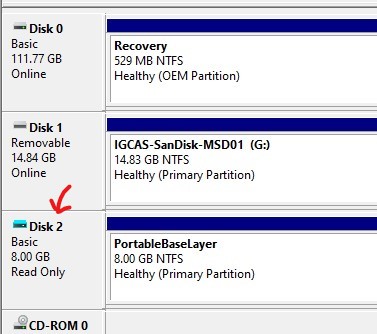
What is PortableBaseLayer Partition?

Some Windows 10 users with May 2019 update are seeing a new partition called PortableBaseLayer. If this is your first time, you might wonder what in the world is the PortableBaseLayer partition.

What is PortableBaseLayer Partition?

Before you ask me, no, PortableBaseLayer is not a virus, malware, or rouge partition.

PortableBaseLayer is a system partition created for Windows Sandbox.

When you enable the Windows Sandbox, the operating system will automatically create the PortableBaseLayer partition and places all the important files that are necessary to run the sandbox.

Depending on your usage, the partition size will be anywhere from 1GB to 10GB. Sometimes, it might even exceed that range too.

In case you don’t know, Windows Sandbox is what it sounds like. It is a built-in sandbox that lets you test programs and settings without affecting the host operating system. Compared to traditional solutions like VMware and VirtualBox, Windows Sandbox is lightweight, fast, and easy to use.

All pro and enterprise users can enable Windows Sandbox as long as the system meets the minimum requirements.

Can I Delete PortableBaseLayer Partition?

No, don’t delete the partition manually as it might corrupt the Windows Sandbox.

How to disable Sign-in screen acrylic (blur) background on Windows 10 May 2019 Update

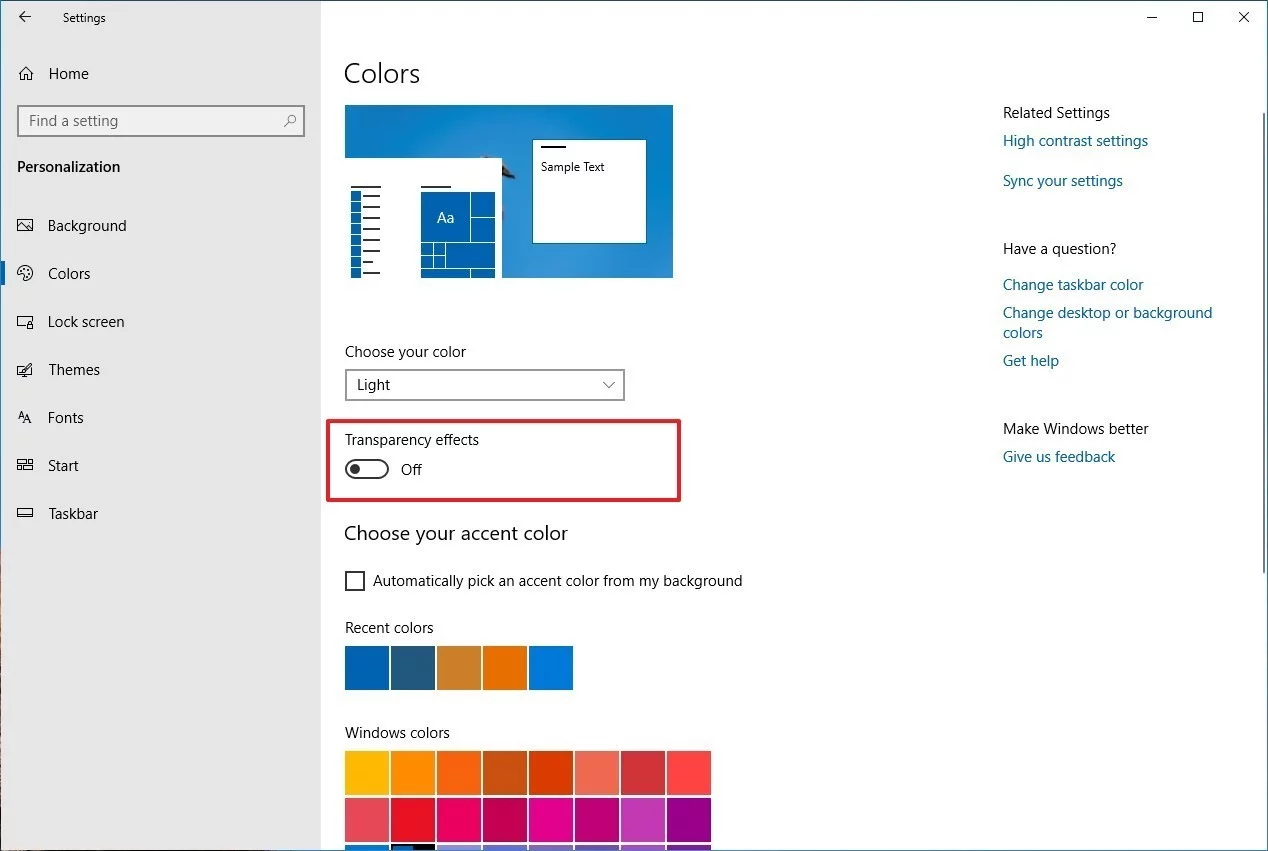
How to disable Sign-in screen blur background using Settings

The easiest and safest process to disable the acrylic material effect in the Sign-in screen background is to use the Settings app, with these steps:

  1. Open Settings.
  2. Click on Personalization.
  3. Click on Colors.
  4. Turn off the Transparency effects toggle switch.

Once you complete these steps, the Sign-in screen will show a clear background like in previous versions. The only caveat to using this option is that you’ll also lose the transparency effects across the desktop and apps.

Continue reading How to disable Sign-in screen acrylic (blur) background on Windows 10 May 2019 Update

Game DVR problem: “Sorry, this PC doesn’t meet the hardware requirements for recording clips.”

According to Microsoft These are the Requirements for “Game DVR On Windows 10”

Hardware requirements for Game DVR on Windows 10

To record game clips with Game DVR on Windows 10, your PC’s video card must support one of these encoders:

  • Intel Quick Sync H.264
  • NVidia NVENC
  • AMD VCE

To check the video card on your PC, go to the search box on the taskbar and search for “device manager.” In Device Manager, expand Display adapters.

Video cards that support NVidia NVENC include:

  • Most GeForce 600 series or later
  • Most Quadro K series or later

Please refer to NVIDIA NVENC Support Matrix for more details.

You always have the option to take a screenshot of your game, even if you don’t have one of these cards.

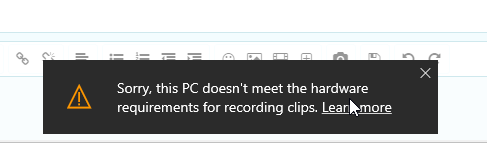
If your PC can’t record game clips, you’ll get a message like this when you try to make one:

Sorry, this PC doesn’t meet the hardware requirements for recording clips.

In that case, do one of the following:

  • Get the latest driver for your current video card (if your PC has more than one video card, make sure the drivers are up to date for both)
  • Install one of the video cards listed here

If your PC has multiple video cards and only one supports Game DVR, make sure you’re using the monitor connected to that card when you record your game.

If you have a supported video card whose driver is up to date and you still can’t record games, open Feedback Hub (a Windows 10 app) and add feedback so we can investigate.

for Original Source click Here

But i had all requirements on my Computer and i still get that error and this helped me to fix this issue.

1)Hold windows button and then press R to open RUN.
2)Type “regedit” and press enter
3)Go to HKEY_lOCAL_MACHINE/ SYSTEM/ CurrentControlSet/ Control
4)Change the entry PortableOperatingSystem from 1 to 0.
5) Reboot


Windows wouldn’t hibernate with Error Event ID 45: volmgr

Just to share my 3-day battle with Windows 7 32bit Pro after it was installed on the Kingston V+100E Self-encrypting SSD 64GB.

To be fair, the problem has little to do with the Kingston SSD actually. There may be incompatibility with Truecrypt 7.1 & Self-encrypting SSD, or it could be old registry entries left-over from my old encrypted HDD but I didn’t investigate further since I’ve solved my hibernation problem.

Update at the end of this article!

*******************************

System:

OS: Win7 32bit Pro (New install, not upgrade)

Laptop: Fujitsu T4215 with CPU upgraded to Intel T7200

HDD: WD Scorpio Black 320GB (Truecrypt 7.1 System FDE) -> Kingston V+100E 64GB (Self-encryption)

Drivers: (All updated to latest from manufacturer)

********************************

Everything seems to work well until I run Easy Transfer to transfer my account from my old HDD to the new SSD. My old WD Scorpio Black was encrypted using Truecrypt 7.1 so there were active Truecrypt registry entries which I’m not aware of & few people seem to know about. Google it & you would’t find many entries if any.

Hibernation will always fail with black screen. When KB/Mouse is touched, the login screen is shown. Event Viewer will show Event ID 45 Error caused by volmgr on \device\harddiskvolume2 (which is my C:\). What’s cryptic is the error is a crash dump driver error. What has crash-dumping in volmgr.sys got to do with hibernation?

A lot in fact, after kernel-mode drivers had crashed or unloaded, the only way the NT Kernel could do stuff is through special filters apparently. So to activate Hibernation, the Kernel has to unload everything & dump everything in RAM to HDD. What if you’re running Bitlocker or Truecrypt, which are software-based encryption?

The Kernel has to filter the RAM data thru these small programs so the Hibernation or Crash dumps are encrypted as well, else there’ll be a security risk. dumpfve.sys for Bitlocker & truecrypt.sys for Truecrypt 7. Unfortuntately I don’t see this documented anywhere. (I did not search SourceForge though.) I found out when I was hunting in the registry.

This registry key is where I found the offending entry.

HKLM\SYSTEM\CurrentControlSet\Control\CrashControl -> DumpFilters

In it, I found “dumpfve.sys” & “truecrypt.sys”. Now I did not install Truecrypt in the new system so the only way is thru’ Easy Transfer.

OK, fine, so I install Truecrypt 7.1 to make sure the proper files are installed. But after rebooting, Windows BSOD & I couldn’t see any crash dump! It may be that active Truecrypt registry is still there thinking the SSD was encrypted. Well I can’t have that! So I did a System Restore & booted up. I then remove the truecrypt.sys entry in all Registry keys, adjust my pagefile size, enabled crash dump 128KB & enabled hibernation with “-size 100”.

Hit the Hibernation button & it WORKS!!!

After that, whatever changes I did to pagefile.sys & crash dump size did not affect Hibernation.

So for those of you who have hibernation problems with Event ID 45 from volmgr. Check your crashdump filter.

Now I still need Truecrypt to access the old encrypted WD Scorpio Black, so what I did was to install Truecrypt in “Portable” mode & run the .exe files instead of an installation. Done!

Update (19/3/2012):

Recently I cleaned the registry of all entries with Truecrypt & install the latest 7.1a version & Windows did not BSOD so I’m a happy camper again. Seems like Truecrypt doesn’t leave many entries in Windows itself, which is a GOOD thing!

Thanks to (original source)