Category Archives: Other

Rufus — The Dog Who Became Amazon’s AI

Rufus, Amazon’s first dog, getting ready to launch a new site. Photo by JORDAN STEAD / Amazon

🐾 Rufus — The Dog Who Became Amazon’s AI
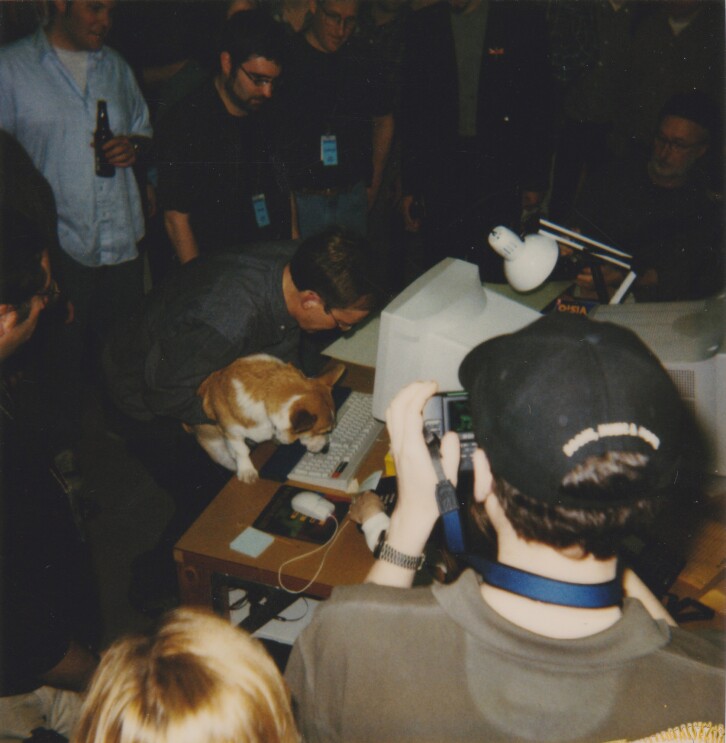
Rufus with his human parents and at work
Rufus — Amazon’s first mascot, now immortalized in AI.

🕯️ Opening Ritual:
In the late 1990s, when Amazon was still a fledgling warehouse of books, a Welsh corgi named Rufus padded through its hallways. He wasn’t just a pet — he became a symbol of friendliness, curiosity, and the playful spirit of discovery.

📜 The Scroll of Rufus

  • Rufus belonged to Eric and Susan Benson, early Amazon employees.
  • He sat in meetings, chased tennis balls down corridors, and lightened the startup grind.
  • His paw print was memorialized, and after his passing, colleagues gifted a stone marker to the Bensons’ Seattle home.

⚙️ The AI Rebirth

In 2024, Amazon launched its generative AI shopping assistant — and named it Rufus. Not after a tech tool, but after the dog who once helped shape Amazon’s culture.
Just as Rufus guided employees with joy, Rufus AI now guides shoppers with knowledge.

🧪 Kapothi Command Box

# Kapothi Ritual: Spotting Rufus
# -----------------------------------------------------------
# 🟢 Comments in green | 🔵 Commands in blue | 🟠 Parameters in orange
# -----------------------------------------------------------

# 🔵 Linux / macOS (Terminal)
curl -I https://www.primevideo.com/storefront

# 🔵 Windows CMD
curl -I https://www.primevideo.com/storefront

# 🔵 Windows PowerShell
$response = Invoke-WebRequest -Uri "https://www.primevideo.com/storefront" -Method Get -MaximumRedirection 0 -ErrorAction SilentlyContinue
$response.Headers

# 📜 Ritual Outcome:
# -----------------------------------------------------------
# → Look for the "Location" key in the headers
# → If redirected to /region/eu        => EU Catalog
# → If redirected to /nonprimehomepage => Global / U.S. Gateway
# → If stays on /storefront            => Direct U.S. Sanctuary
# -----------------------------------------------------------

🪶 Closing Reflection

Rufus reminds us that even in the most technical of shrines — whether proxy logs or AI shopping assistants — there is room for warmth, play, and legacy. A dog’s paw print became a brand’s heartbeat, and now, an AI’s name.


Removing Hidden Unicode Folders from USB Drives

Removing Hidden Unicode Folders from USB Drives

Introduction:
USB drives infected by malware often create hidden folders with strange or unreadable Unicode characters. These folders can trap files, confuse antivirus tools, and resist normal deletion commands. This guide documents a successful method to recover files and remove such stubborn folders.

Symptoms

  • A hidden folder appears in the root of the drive with no visible name.
  • Errors like No mapping for the Unicode character exists or Cannot remove the item because it is in use occur.
  • Files are moved into this hidden folder by the malware.

Investigation

Using PowerShell with Get-ChildItem -Force reveals the hidden folder. Its attributes typically show as d--hs-, meaning it is both hidden and system-protected.

Solution

Step 1: Capture the Folder Object

$folder = Get-ChildItem D:\ -Force | Where-Object { $_.Attributes -match "Hidden" -and $_.Attributes -match "System" }

Step 2: Move Files Out

Move-Item "$($folder.FullName)\*" "D:\RecoveredFiles\" -Force

Step 3: Remove Attributes

attrib -h -s $folder.FullName

Step 4: Delete the Folder

rd /s /q "\\?\D:\‌"

Lessons Learned

  • Malware often uses Unicode tricks to hide payloads.
  • PowerShell is more effective than CMD for handling hidden/system files.
  • The \\?\ path prefix is a powerful tool for deleting corrupted or unreadable folders.

Conclusion

By combining PowerShell commands with the raw path deletion method, users can safely recover files and cleanse USB drives of hidden Unicode folders. Once files are recovered, formatting the USB ensures complete removal of residual malware artifacts.

Kapothi Editorial Note: This ritual of cleansing USB drives is both a technical solution and a symbolic act of restoring purity to your digital shrine.

WSQK 50,000 Watts: The History Behind the Stranger Things Radio Giant

🎙️ WSQK & the 50,000‑Watt AM Chronicle

The glowing “50,000 WSQK WATTS” sign in Stranger Things is more than neon — it’s a tribute to the golden age of AM broadcasting.

WSQK radio station neon sign — 50,000 watts
Add your Stranger Things image here — WSQK neon sign with “50,000 watts”.

TL;DR: “50,000 watts” was the maximum AM station power, giving clear-channel coverage across vast regions. Stranger Things uses it to make WSQK feel authentically powerful and retro.

What “50,000 watts” means in AM radio

  • Broadcast power: 50,000 watts (50 kW) was the traditional maximum for major AM stations in the U.S.
  • Clear-channel giants: High power + protected frequencies allowed night-time signals to travel hundreds of kilometers.
  • Cultural signal: Stations advertised “50,000 watts” to symbolize reach, authority, and prestige.

WSQK in Stranger Things

  • Fictional station: WSQK is Hawkins’ radio station with a bold “50,000 watts” neon sign.
  • Characters & setting: Robin Buckley and Steve Harrington host the Morning Squawk, grounding the station in 1980s radio culture.
  • World-building: The sign anchors Hawkins in the era’s AM broadcast tradition, echoing real clear-channel titans.

Comfort insight: The WSQK neon isn’t just aesthetics — it’s a storytelling device that signals reach and urgency, perfect for plotlines that depend on town-wide broadcasts.

Clear‑channel timeline

1930s–1950s

AM superstations rise with protected frequencies and high-power transmitters.

1960s–1980s

“50,000 watts” becomes a marketing badge; signals span states at night.

1990s–Today

FM, TV, and digital shift attention, but AM heritage and overnight coverage remain iconic.

Quick comparison: broadcast power

  • Local AM station: 1,000–5,000 watts → city coverage
  • WSQK‑style AM giant: 50,000 watts → multi‑state, night‑time reach
  • FM stations (1980s): Often 6,000–100,000 watts, but coverage depended more on antenna height and terrain

In Stranger Things, “50,000 WSQK Watts” turns a neon sign into a history lesson — a broadcast anthem from the era when AM radio carried stories across the night.

Cyclone Ditwah: The Devastation Remembered

Cyclone Ditwah: The Devastation Remembered

The day Cyclone Ditwah made landfall remains one of the darkest chapters in Sri Lanka’s history. This is a chronicle of the relentless winds, catastrophic floods, and widespread destruction — and the resilience of the Sri Lankan people.

🌊 Coastal & Inland Flooding

Record-breaking rainfall and storm surges caused flash floods.

⚡ Infrastructure Collapse

High winds toppled towers and severed roads.

🌾 Agricultural Ruin

Paddy, tea, and coconut plantations devastated.

🏠 Humanitarian Crisis

Hundreds of thousands displaced; health crises followed.

Continue reading Cyclone Ditwah: The Devastation Remembered

🌪️➡️🌞 After Ditwah, the Sun Returns

Chronicle Entry: The Day the Sun Returned

For days, Sri Lanka was bound in Ditwah’s storm scroll. Winds tore through villages, rains drowned the roads, bridges collapsed into silence. Thousands were displaced, carrying fragments of their lives into shelters. The island felt like a verse erased by the cyclone’s hand.

But then, the sun came. Its light fell on broken roads, on shelters filled with weary families, on volunteers carrying food and hope. Children stepped outside, their laughter rising like a new chant. Farmers looked at their fields, and fishermen, who had carried their boats on lorries to support other areas, stood among the helpers. All saw not just damage but the promise of renewal.

The Chronicle turns a page

  • Destruction → resilience: Communities begin to clear, repair, and rebuild.
  • Darkness → light: Sunlight returns, bringing clarity and calm.
  • Loss → rebuilding: Aid, solidarity, and everyday rituals resume.

Ditwah will be remembered as a storm that tore verses from our scroll, but this day — the day the sun came — will be remembered as the first ink stroke of recovery.

Ditwah has passed away from the island, moving toward India, but the after‑effects are still unfolding. Even this morning, landslides continue to strike, reminding us that the storm’s story is not yet finished. Communities must remain vigilant, careful, and united as recovery begins. The sun has returned, but caution and resilience are still needed to protect lives and rebuild safely.

Latest updates (as of Nov 30, 2025):
Cyclone Ditwah nears Tamil Nadu after Sri Lanka toll hits 153, disrupting flights and shutting schools
Cyclone Ditwah Tracker LIVE: Heavy rains in Tamil Nadu as India braces for storm
Cyclone Ditwah LIVE: Storm nears Tamil Nadu-Puducherry coastline; Sri Lanka death toll crosses 200
Cyclone Ditwah: Death toll crosses 200 in Sri Lanka; India aids rescue under Operation Sagar Bandhu
Cyclone Ditwah: Toll rises to 193 in Sri Lanka; India rushes more relief


🌪️➡️🌞 After Ditwah, the Sun Returns
Days of rain, winds, and broken roads… Sri Lanka stood in darkness.
Today the sun came back — shining on shelters, on faces lifted with hope, on the first steps of recovery.
This is not just light — it’s the first ink stroke of resilience.

SQL Express on Windows 11 — Connection Limits Explained

SQL Express on Windows 11 — Connection Limits Explained

Windows 11 is widely used for development and small-scale hosting. When installing SQL Server Express, it’s important to understand which limits apply to the operating system and which are specific to SQL Express itself.


Connection limits in Windows 11

  • File sharing (SMB): Limited to 20 concurrent inbound connections.
  • Remote Desktop (RDP): Only 1 interactive session at a time.
  • SQL Server Express via TCP (port 1433): No operating system limit. Multiple users can connect, subject to hardware resources.

SQL Server Express resource limits

  • Database size: 10 GB per database.
  • Memory usage: 1 GB RAM per instance.
  • CPU usage: 1 socket, up to 4 cores.
  • Connections: No hard cap; performance depends on the above limits.

Windows 11 vs Windows Server — Connection limits

Feature / Limit Windows 11 (Client OS) Windows Server (Server OS)
File sharing (SMB) Max 20 concurrent inbound connections Thousands of concurrent connections supported
Remote Desktop (RDP) 1 interactive session at a time Multiple concurrent sessions (with RDS licensing)
SQL Server Express (TCP) No OS-imposed limit; resource-bound only No OS-imposed limit; resource-bound only
Database size (Express) 10 GB per database 10 GB per database (same Express cap)
Memory (Express) 1 GB RAM per instance 1 GB RAM per instance (same Express cap)
CPU (Express) 1 socket, up to 4 cores 1 socket, up to 4 cores (same Express cap)
Scalability Suitable for small apps, dev/test Suitable for production workloads, large user bases

Best use cases

  • Windows 11 + SQL Express: Ideal for developers, testing environments, small business apps, or limited multi-user scenarios.
  • Windows Server + SQL Server (Express/Standard/Enterprise): Recommended for production workloads, larger user bases, multiple RDP sessions, or when SMB connections exceed 20.

Download and install SQL Server Express 2022 on Windows 11

Option A: Quick GUI install (official installer)

  1. Download: Visit the official Microsoft SQL Server Express download page and get SQL Server 2022 Express.
  2. Run the installer: Choose “Basic” for a fast setup or “Custom” to select features and installation path.
  3. Finish: Note the instance name (default: SQLEXPRESS), and confirm SQL Server Browser service if you plan remote connections.

Option B: Command line install (silent)

Use a silent unattended install for repeatable setups and documentation.

# 1) Download the SQL Server 2022 Express setup bootstrapper
$uri = "https://go.microsoft.com/fwlink/?linkid=2203201"  # SQL 2022 Express bootstrapper (evergreen link)
$setup = "$env:TEMP\SQLEXPRESS2022.exe"
Invoke-WebRequest -Uri $uri -OutFile $setup

# 2) Run a silent install of Database Engine only
& $setup /QS /ACTION=Install /FEATURES=SQLEngine /INSTANCENAME=SQLEXPRESS `
  /IACCEPTSQLSERVERLICENSETERMS `
  /SECURITYMODE=SQL /SAPWD="Strong!Passw0rd" `
  /TCPENABLED=1 /SQLSVCACCOUNT="NT AUTHORITY\NETWORK SERVICE" `
  /UPDATEENABLED=TRUE

# Notes:
# - Change SAPWD to your strong password if enabling Mixed Mode (SQL logins).
# - /QS = quiet simple UI; use /Q for fully silent.

Enable remote TCP connections (optional)

  1. Open SQL Server Configuration Manager: Enable TCP/IP under “SQL Server Network Configuration” for your instance.
  2. Firewall rule: Allow inbound TCP on port 1433 (or your chosen port).
    New-NetFirewallRule -DisplayName "SQL Server 1433" -Direction Inbound -Protocol TCP -LocalPort 1433 -Action Allow
        
  3. Restart services: Restart the SQL Server (SQLEXPRESS) service after changes.

SQL Server Management Studio (SSMS)

  • Download SSMS: Install SSMS to manage databases, users, and queries.
  • Connect: Use localhost\SQLEXPRESS or machine-name\SQLEXPRESS. For remote clients, use IP:1433 if a custom port is configured.

Post-install checklist

  • Authentication mode: Choose Windows-only or Mixed Mode depending on your app requirements.
  • Backups: Set up regular backups (full/diff/log) based on change rate and recovery objectives.
  • Performance basics: Verify indexes, set appropriate file growth, and monitor memory usage (Express cap is 1 GB per instance).
  • Security: Restrict inbound access, use strong passwords, and patch regularly.

Summary

Windows 11 limits SMB connections (20) and allows only one interactive RDP session, but it does not impose a limit on TCP connections to SQL Server Express. SQL Express caps database size, memory, and CPU, not connection count. For higher concurrency and production workloads, Windows Server with SQL Server Standard or Enterprise is the recommended path.

How to Report Scams and Fraud in Sri Lanka — Full Guide to CID, CCID, and CIABOC Complaints

How to Report Scams and Fraud in Sri Lanka — Full Guide to CID, CCID, and CIABOC Complaints

A Kapothi legacy post for civic clarity and communal protection

The Civic Invocation: Reporting Scams and Fraud in Sri Lanka

In today’s digital and financial landscape, scams are no longer rare — they’re ritualized traps. From fake job offers and visa promises to WhatsApp deception and investment fraud, many Sri Lankans face these threats daily. This guide helps you take action, restore clarity, and protect your community.

Where to Report Scams in Sri Lanka

1. Sri Lanka Police – Criminal Investigation Department (CID) – අපරාධ විමර්ෂණ දෙපාර්තමේන්තුව

  • Handles: Financial fraud, cross-border scams, identity theft, impersonation
  • Prepare: Victim’s statement, suspect’s details (name, phone, photo), bank transaction records, timeline of events
  • Action: Visit your nearest police station and request escalation to CID

2. Computer Crime Investigation Division (CCID) – පරිගණක අපරාධ විමර්ශන අංශය

  • Handles: WhatsApp and social media scams, online impersonation, fake donation campaigns, romance scams
  • Email: [email protected]
  • Include: Screenshots, chat logs, contact details, full incident description

3. CIABOC – Commission to Investigate Allegations of Bribery or Corruption – අල්ලස් හෝ දූෂණ චෝදනා විමර්ශන කොමිෂන් සභාව

  • Handles: Bribery, corruption, asset misrepresentation, fraud involving public officials
  • Online Complaint Form: ciaboc.gov.lk/contact/complaints
  • Attach: Documents, incident description, request for investigation

Common Scenarios You Can Report

  • Fake job offers (local or overseas)
  • Visa and migration scams
  • Investment fraud and pyramid schemes
  • Real estate deception
  • Romance scams and emotional manipulation
  • Social media impersonation
  • Bribery and misuse of public office

Kapothi Ritual Tip

Create a scroll of fraud documentation with:

  • Timeline of events
  • Transaction logs
  • Screenshots and chat logs
  • Personal statement

Stylize it with clarity and emotional resonance — ready for submission and archival.

Please be alert: False complaining shall be considered an offence punishable by up to 10 years imprisonment.

(Sec.21 of the Commission to Investigate Allegations of Bribery or Corruption Act No.19 of 1994)

“Starlink in Sri Lanka: Key Questions I Asked Gemini”

That’s an insightful question and gets to the core of Starlink’s business model and target market in a place like the United States.

You are correct: the vast majority of people in the USA who buy Starlink are those in rural or remote areas where traditional internet options are either non-existent or extremely poor.

Here’s why Starlink isn’t a widespread competitor to fiber and cable internet in urban and suburban areas:

Continue reading “Starlink in Sri Lanka: Key Questions I Asked Gemini”

How to get full PC memory specs (speed, size, type, part number, form factor) on Windows 10/11

Check all memory details

The above commands help you to determine the most useful information about the RAM installed on your computer. However, there is another command you can use to query all the available details at the same time.

To view all the memory details on Windows 10/11, then use these steps:

  1. Open Start.
  2. Type Command Prompt, right-click the top result, and select the Run as administrator option.
  3. Type the following command to list every memory detail possible and press Enter
    wmic memorychip list full

  4. Confirm the available information for each memory module installed on the device.
  5. (Optional) Type the following command to view only the specific details and press Enter
    wmic memorychip get devicelocator, manufacturer, partnumber, serialnumber, capacity, speed, memorytype, formfactor

Supported types

Memory types the command can identify:

  • 0: Unknown.
  • 1: Other.
  • 2: DRAM.
  • 3: Synchronous DRAM.
  • 4: Cache DRAM.
  • 5: EDO.
  • 6: EDRAM.
  • 7: VRAM.
  • 8: SRAM.
  • 9: RAM.
  • 10: ROM.
  • 11: Flash.
  • 12: EEPROM.
  • 13: FEPROM.
  • 14: EPROM.
  • 15: CDRAM.
  • 16: 3DRAM.
  • 17: SDRAM.
  • 18: SGRAM.
  • 19: RDRAM.
  • 20: DDR.
  • 21: DDR2.
  • 22: DDR2 FB-DIMM.
  • 24: DDR3.
  • 25: FBD2.
  • 26: DDR4.

Supported form factors

Form factors the command can identify:

  • 0: Unknown.
  • 1: Other.
  • 2: SIP.
  • 3: DIP.
  • 4: ZIP.
  • 5: SOJ
  • 6: Proprietary.
  • 7: SIMM.
  • 8: DIMM.
  • 9: TSOP.
  • 10: PGA.
  • 11: RIMM.
  • 12: SODIMM.
  • 13: SRIMM.
  • 14: SMD.
  • 15: SSMP.
  • 16: QFP.
  • 17: TQFP.
  • 18: SOIC.
  • 19: LCC.
  • 20: PLCC.
  • 21: BGA.
  • 22: FPBGA.
  • 23: LGA.
  • 24: FB-DIMM.