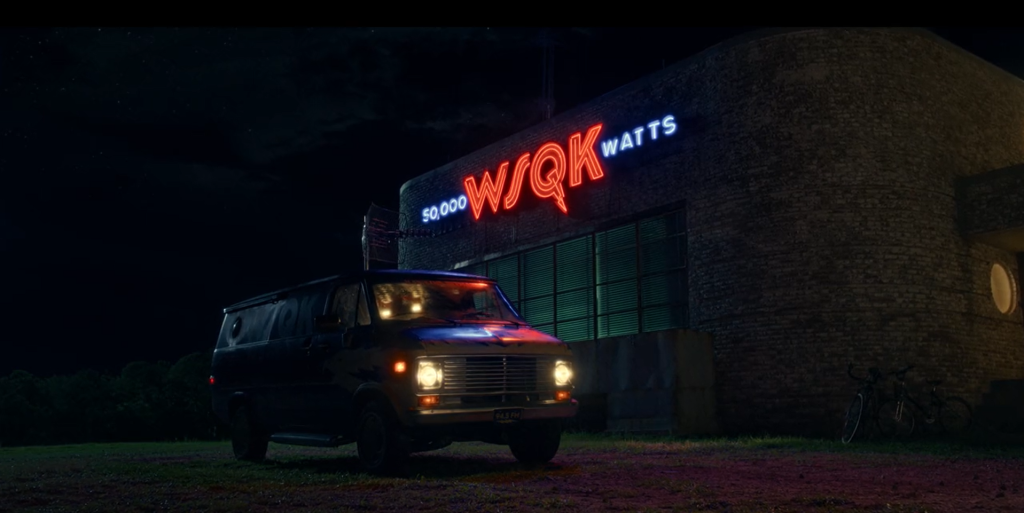
🎙️ WSQK & the 50,000‑Watt AM Chronicle
The glowing “50,000 WSQK WATTS” sign in Stranger Things is more than neon — it’s a tribute to the golden age of AM broadcasting.
TL;DR: “50,000 watts” was the maximum AM station power, giving clear-channel coverage across vast regions. Stranger Things uses it to make WSQK feel authentically powerful and retro.
What “50,000 watts” means in AM radio
- Broadcast power: 50,000 watts (50 kW) was the traditional maximum for major AM stations in the U.S.
- Clear-channel giants: High power + protected frequencies allowed night-time signals to travel hundreds of kilometers.
- Cultural signal: Stations advertised “50,000 watts” to symbolize reach, authority, and prestige.
WSQK in Stranger Things
- Fictional station: WSQK is Hawkins’ radio station with a bold “50,000 watts” neon sign.
- Characters & setting: Robin Buckley and Steve Harrington host the Morning Squawk, grounding the station in 1980s radio culture.
- World-building: The sign anchors Hawkins in the era’s AM broadcast tradition, echoing real clear-channel titans.
Comfort insight: The WSQK neon isn’t just aesthetics — it’s a storytelling device that signals reach and urgency, perfect for plotlines that depend on town-wide broadcasts.
Clear‑channel timeline
1930s–1950s
AM superstations rise with protected frequencies and high-power transmitters.
1960s–1980s
“50,000 watts” becomes a marketing badge; signals span states at night.
1990s–Today
FM, TV, and digital shift attention, but AM heritage and overnight coverage remain iconic.
Quick comparison: broadcast power
- Local AM station: 1,000–5,000 watts → city coverage
- WSQK‑style AM giant: 50,000 watts → multi‑state, night‑time reach
- FM stations (1980s): Often 6,000–100,000 watts, but coverage depended more on antenna height and terrain
In Stranger Things, “50,000 WSQK Watts” turns a neon sign into a history lesson — a broadcast anthem from the era when AM radio carried stories across the night.